Attendance without surveillance
Most attendance systems answer a question nobody asked: was a body near a device at 9am? The questions that matter are about capacity, coverage, and whether anyone is drowning. You can answer those without reading a single screen.
“The moment attendance becomes a loyalty test, everyone passes it and nobody works better.”
The badge-swipe delusion
A European fintech we work with used to run attendance off door badges and VPN logins. On paper, compliance was 96 per cent. In practice, their Madrid office had people badging in, taking calls from the café downstairs, and badging out at six. The data was pristine and meaningless.
When they moved to Momentum’s attendance intelligence, the interesting finding was not who was absent. It was that Thursdays were quietly overloaded: fewer people available, same ticket volume, response times drifting. The old system could never have seen that, because it counted bodies rather than capacity.
Presence is only useful as an input to a planning question. Detached from planning, it degrades into theatre.
There is a second cost to the theatre that rarely gets counted. The people who play the badge game best are often the ones with the least actual work, while a senior analyst who does her best thinking from home at 7am shows up as a compliance problem. Reward the ritual and you select for the ritualists.
What the agent does and refuses to do
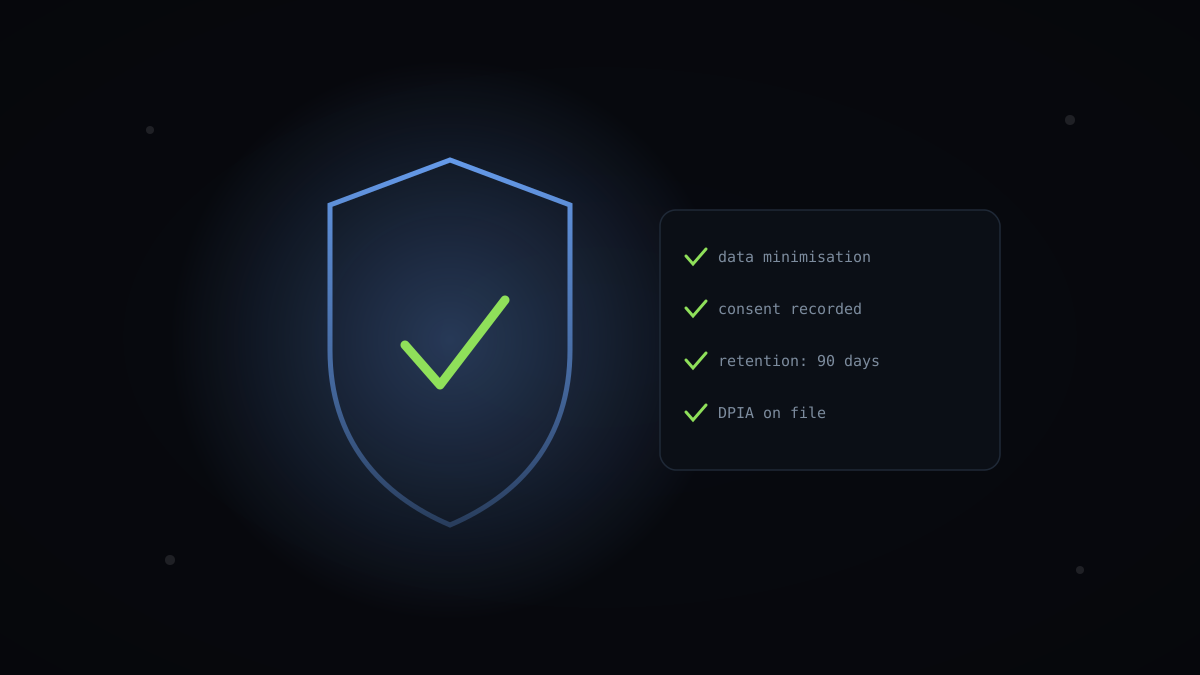
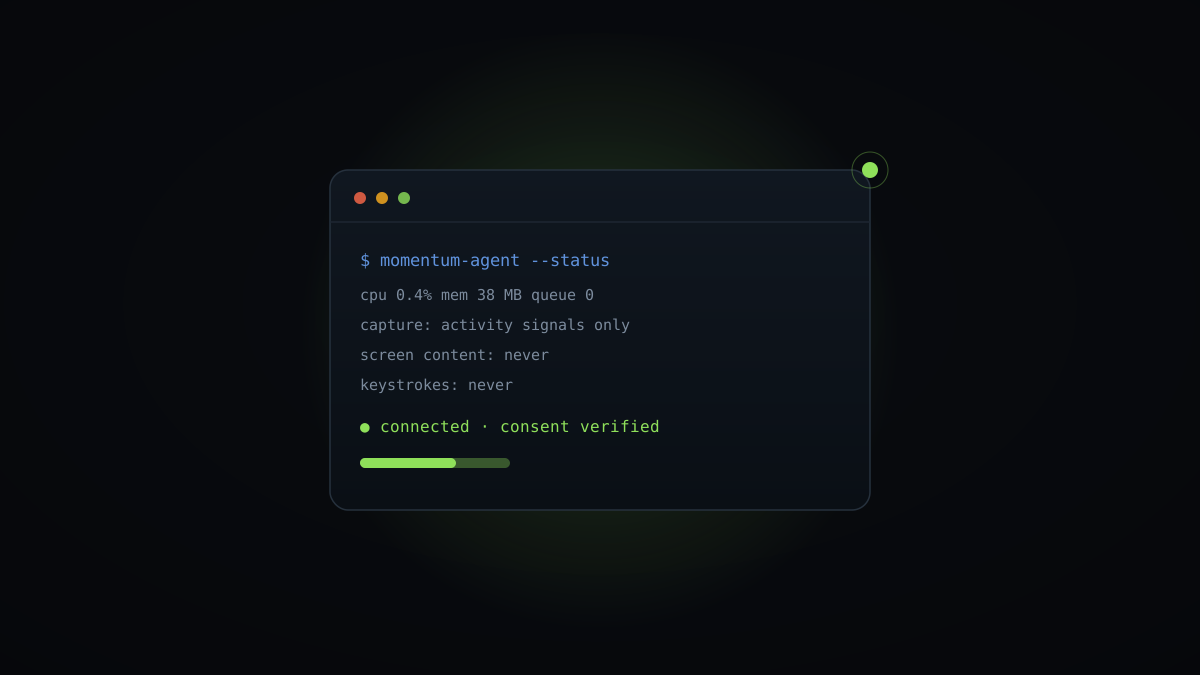
Our desktop agent records which category of application is active and when the day starts and ends. It does not capture keystrokes, screenshots, message content, or webcam anything. This is not a settings toggle a keen administrator can flip; the capability simply is not in the binary.
We made that architectural choice in 2024 and it has cost us deals. Some buyers genuinely want screen recording. We tell them the same thing every time: the products that offer it also ship a morale problem, and we are not in that business.
What remains is enough. Start time, end time, active categories, break patterns, all aggregated. It answers every legitimate staffing question we have ever been asked.
A useful test we suggest to buyers: for each data point a tool collects, write down the decision it feeds. Screenshots feed no staffing decision. Keystroke counts feed no capacity plan. If a data point exists only to satisfy curiosity about individuals, it is a liability wearing a feature’s clothing, and one day a regulator or a resignation letter will price it for you.
Aggregate first, individual by exception
The default view a manager sees is the team. Ten people, coverage across the day, deviation from the plan. Individual drill-down exists, but it is logged, visible to the person concerned, and in most customer configurations requires a stated reason.
This ordering changes behaviour on both sides. Managers stop checking whether a specific person was online at 8:47 and start asking whether the team can absorb next month’s launch. Employees stop feeling watched and start using the same data to defend their own boundaries.
One team lead in a 40+-country deployment told us her direct reports now cite the coverage view back to her when declining meetings. She counts that as the system working.
Presence is not effort, and pretending otherwise is expensive
Nine logged hours can contain three hours of real work. Six logged hours can contain five. Any leader who sets targets on logged time will get logged time, delivered with enthusiasm, and nothing else will improve.
So we deliberately separate the two signals. Attendance answers ‘can this team cover the work?’ Focus and category data answer ‘what kind of work is the time going into?’ Merging them into one virtue score is the single most common misuse we talk customers out of.
Keep the questions separate and each dataset stays honest.
The fintech learned this the expensive way before we met them. An earlier tool had blended login hours into a single engagement score, and within a quarter their Lisbon office had the longest logged days in the company alongside its slowest release cadence. Long days were the performance. Once the score was retired, the hours normalised and, gradually, the shipping recovered.
The rollout conversation that decides everything
Acceptance is won or lost in the first announcement, not in the settings. The deployments that go well share a script: here is exactly what is collected, here is what is technically impossible, here is your own dashboard showing your own data before your manager sees anything derived from it.
The deployments that go badly share a different script: silence, then discovery, then a works-council meeting nobody enjoys. We have been asked to rescue a few of those. It takes months to rebuild what one quiet install destroyed in a day.
Give people their own data first. Everything else follows from that single act of sequencing.
One practical detail we insist on: take live questions in the announcement forum and answer the hardest one honestly, even when the honest answer is ‘yes, a manager could request your individual attendance record, and here is the logged process that governs it’. Evasion in that room costs more than any uncomfortable truth. People can work with rules they dislike; they cannot work with rules they suspect exist but have never seen.
What acceptance actually looks like
Six months into the fintech deployment, their internal survey asked whether employees would keep the system if given a vote. Sixty-eight per cent said yes, and the most common reason cited was not privacy assurances. It was that overtime finally became visible, and visible overtime got staffed.
That is a consistent pattern we see. People do not object to being counted. They object to being judged by machinery they cannot see, on criteria nobody stated.
Fix the visibility and the criteria, and attendance stops being a surveillance question at all. It becomes what it should have been from the start: a shared, boring, useful fact about capacity.
Boring is the goal, genuinely. The healthiest deployments we run are the ones where, a year in, nobody talks about the attendance system any more than they talk about payroll. It counts, it informs the roster, and the arguments it once provoked have quietly gone somewhere more deserving.
of surveyed employees would vote to keep the system
If you only remember four things
- Badge-swipe attendance produced 96 per cent compliance and zero insight; capacity-based attendance surfaced a chronic Thursday overload.
- Momentum’s agent records app categories and day boundaries only, with keystroke and screenshot capture absent from the binary by design.
- Show every employee their own data before any manager sees anything derived from it, and acceptance follows.
- Keep attendance and effort as separate signals; merging them into one virtue score corrupts both datasets.
Writes for The Signal about privacy and the future of measurable, humane work — drawing on anonymised patterns from the teams and focus hours analysed on Momentum.
Want this picture for your teams?
See timelines, productivity scores, and department comparisons on your own data.
Book a demo