Coaching with evidence, not anecdotes
Most one-on-ones run on whatever both people happen to remember from the past fortnight. That memory is patchy, recency-biased, and skewed toward whoever had the loudest week. We have spent five years watching what happens when managers swap anecdotes for evidence, and the difference is bigger than we expected.
“The kindest thing a manager can bring to a one-on-one is an accurate picture.”
The anecdote problem
Ask a manager how a report’s month went and you will usually get a story about the last four days. Human memory compresses badly. The sprint that shipped on Friday looms large; the three weeks of quiet, careful work that made it possible have already faded. Coaching built on that memory rewards drama and punishes consistency.
We saw this vividly with a 60-person fintech engineering org in Bangalore. Their managers rated the same engineer’s quarter differently depending on whether the review happened before or after a production incident. Same work, same person. The only variable was what the manager could recall on the day.
Anecdotes also flatter the visible. People who narrate their work in Slack get remembered. People who simply do it often don’t.
What evidence actually looks like
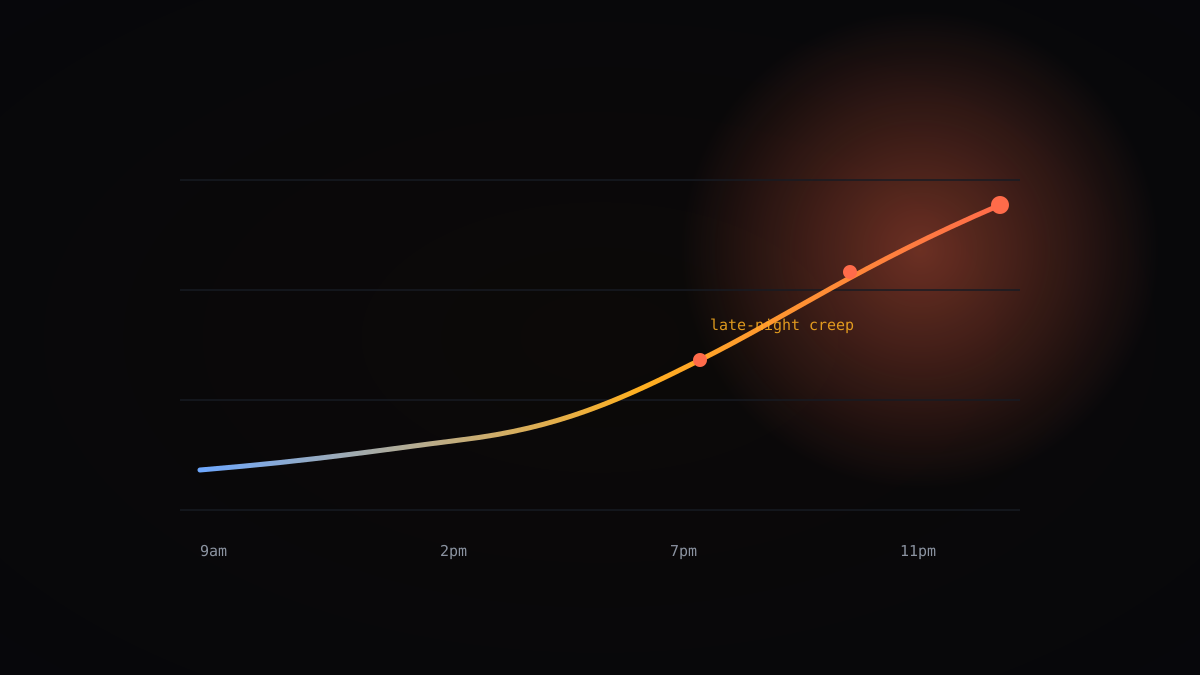
Evidence is not a dashboard of everything someone did. It is a small set of patterns worth talking about: focus hours trending down for three weeks, meeting load creeping from six hours to eleven, deep-work blocks that used to start at 9am now not starting until 2pm. Patterns, not events.
Momentum’s coaching view deliberately shows trends over six weeks rather than daily numbers. A single bad Tuesday is noise. Six Tuesdays that all look the same is a conversation. We built it that way after watching early customers fixate on yesterday’s chart and miss the slow drift underneath it.
The best evidence often has nothing to do with output. Calendar fragmentation, after-hours activity, and the ratio of collaborative to solo time tell you far more about how someone is coping than any completion metric.
Two or three patterns per meeting is the ceiling. Bring five charts and you are running an audit; bring one trend and a genuine question and you are coaching. Managers who internalise that distinction get dramatically better answers from exactly the same data.
Start with the person’s own data, shown to them first
Our strongest recommendation, and the one customers resist most: the individual should see their data before their manager mentions it. When someone walks into a one-on-one already knowing their focus time dropped 30%, the conversation starts from shared reality rather than ambush.
One operations team in Manchester made this a ritual. Every report spends five minutes with their own trends before the meeting and picks one pattern they want to discuss. Managers there told us the meetings got shorter and noticeably less defensive within a month.
There is a quieter benefit too. When people review their own patterns regularly, many problems get fixed before any meeting happens. A developer in that Manchester team noticed his own Thursday collapse, traced it to a recurring vendor call, and moved it himself. His manager only heard about it afterwards, as a story rather than an issue.
Ambush kills coaching. Shared screens save it.
Questions beat conclusions
The data tells you what changed. It almost never tells you why. A drop in focus hours could be a struggling project, a sick parent, a noisy new office neighbour, or a manager who keeps booking 30-minute check-ins across the person’s best hours. Only the person knows which.
So the move is always a question. Not “your deep work is down, what’s going on” delivered as an accusation, but “I noticed your mornings look more fragmented lately, does that match how the month has felt?” The second version invites the person to interpret their own pattern.
We tracked this informally across customer interviews. Managers who opened with questions reported their reports raising problems earlier, sometimes before the data showed anything at all. The evidence had built enough trust that people stopped waiting to be asked.
When the data and the story disagree
Sometimes a report says everything is fine and the trends say otherwise. Treat the gap as information, not as a lie detector result. People say “fine” for a hundred reasons, and half of them are about whether they trust you with the real answer.
A support team lead in Pune described her approach to us: she names the gap out loud. “You’re telling me it’s manageable, but your evenings have been active for three straight weeks. Help me square those.” No verdict, just an honest observation offered back.
The reverse gap matters too. When someone insists they are drowning but their load looks average, the data protects them from being dismissed. Perhaps the work is average in volume but brutal in kind. That is a real conversation, and it starts because a number gave it a doorway.
The failure modes to avoid
The fastest way to poison evidence-based coaching is to use the evidence for scoring. The moment a trend line feeds a performance rating, people manage the line instead of the work. We have watched this happen twice at customers, and both times the recovery took longer than the rollout did.
Second failure: bringing data to every conversation. Some one-on-ones should be about career hopes, team friction, or nothing measurable at all. If the charts appear weekly, they become wallpaper. Reserve them for when a pattern genuinely warrants attention.
Third: comparing individuals to each other. Compare people to their own baseline, always. A designer’s healthy week looks nothing like an SRE’s, and both look nothing like a salesperson’s. Cross-person comparison is where coaching quietly turns into ranking.
What changes after six months
Customers who stick with this for two quarters report a consistent shape of change. One-on-ones get less frequent but longer. Managers escalate fewer surprises upward because fewer things surprise them. And the phrase “I didn’t know it had got that bad” starts disappearing from exit interviews.
The fintech org in Bangalore ran the numbers themselves: regretted attrition on teams using coaching views fell from nine departures to four year over year, while the control group stayed flat. Correlation, they were careful to say. But they rolled it out to everyone anyway.
The habit spreads sideways too. Once reports experience a manager who arrives informed rather than opinionated, they start bringing their own patterns to the table unprompted. Coaching stops being something done to people and becomes something done with them, which was presumably the point all along.
Evidence does not make anyone a good coach. It just stops good coaches from flying blind, and that turns out to be most of the battle.
regretted departures per year on teams using coaching views, versus flat elsewhere
If you only remember four things
- Show trends over six weeks rather than daily numbers, because a single bad day is noise while a repeated pattern is a conversation.
- Let each person see their own data before the one-on-one so the meeting starts from shared reality instead of ambush.
- Open with a question about what changed rather than a conclusion, since the data shows the pattern but only the person knows the cause.
- Never feed coaching trends into performance ratings, or people will start managing the line instead of the work.
Writes for The Signal about leadership and the future of measurable, humane work — drawing on anonymised patterns from the teams and focus hours analysed on Momentum.
Want this picture for your teams?
See timelines, productivity scores, and department comparisons on your own data.
Book a demo